Category: Case Studies

  • 2008 to Now: The DaMatrix Studios Story

    2008 to Now: The DaMatrix Studios Story

    Role: Technical Partner & Digital Architect, Ongoing Since 2008

    How It All Began

    “How It All Began” has been part of several DSN campaigns over the years — a nod to the studio’s rich history of operations and the guests who came through in the early days. DWI has interviewed names like J. Cole, Cardi B, and Nipsey Hussle over the studio’s run, part of a legacy that’s earned him the nickname “The Podfather.”
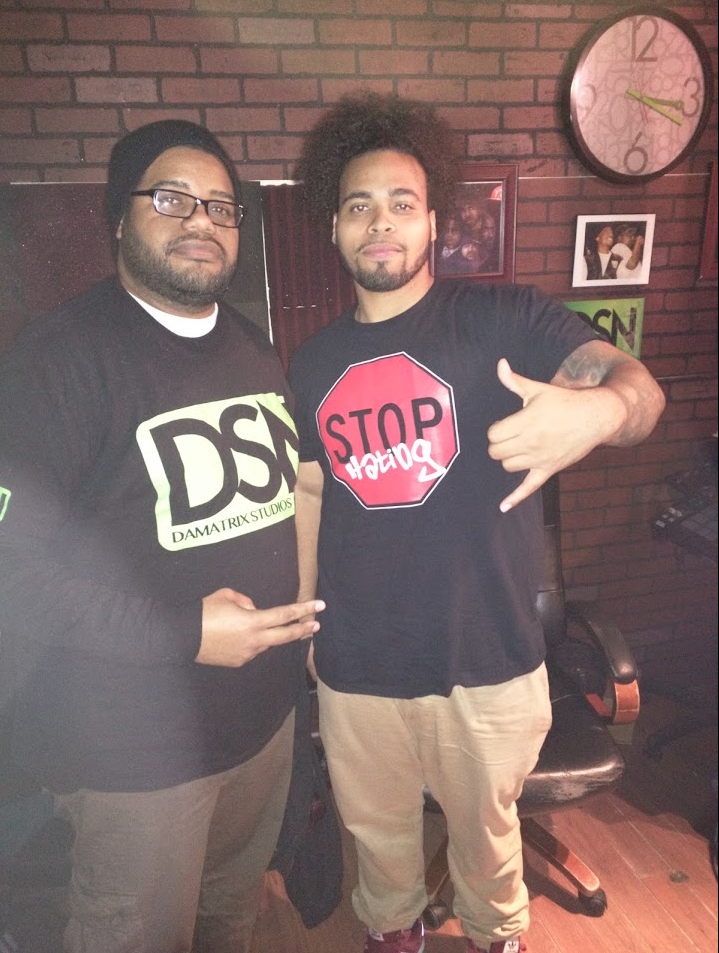
    I met Damien “DWI” Williams online in 2008, back on Stickam — he was live streaming radio, interacting with his chat in real time, and giving his audience a behind-the-scenes look at engineering a show called The A&R Report. I followed him for weeks, genuinely into what he was building.

    One day he mentioned he needed a website. At the time I was working night shifts as a security guard, so I coded him one overnight and delivered it the next morning. He told me straight up that he didn’t love the site — but that I was his guy. That was it. We’ve been partners and friends ever since.

    Somewhere along the way, our shared obsession with The Matrix became part of the partnership’s identity too — DaMatrix Studios takes its name from the films, and to this day, DWI calls me “The Oracle” while going by “Morpheus” himself.

    Nearly Two Decades of Building

    What started as one website turned into an ongoing, informal partnership that’s spanned close to twenty years. Over that time, I’ve been DaMatrix’s go-to person for anything web or PC related:

    • Built and rebuilt his website across several iterations, including his current site and the one currently in progress
    • Set up digital infrastructure — email systems and the operational backbone behind the business
    • Managed his social media presence across platforms
    • Built a mobile app for the business
    • Provided remote computer troubleshooting whenever something broke

    Beyond the technical work, I’ve also been a long-running sounding board and brainstorming partner for his business direction — the kind of relationship where you’re thinking through problems together, not just executing tasks handed down.

    Where Things Stand Now

    The partnership is as active today as it’s ever been. Current work includes:

    A new site build, following the previous version I completed.

    A rebrand of DSN (DaMatrix Studios Network) structured around his 3 Ps framework for podcast production: Produce, Perform, Promote.

    A manuscript, written with AI assistance, for a potential book — one that’s now being used as the foundation for a new business plan, social strategy, website direction, and day-to-day operational assets.

    The Takeaway

    This is the longest-running relationship in my portfolio, and it’s taught me the most about what real partnership looks like: showing up consistently, being useful across whatever the business actually needs at the time — not just the skills you’d put on a resume — and sticking with someone through the slow years, not just the visible wins. DWI is loyal to the people he considers his own, and I’ve tried to earn that the same way, one project at a time.

    References: DaMatrix Studios Network (YouTube & socials), Windows Over Atlanta (YouTube), damatrixstudios.com, damatrixstudios.hiphop, DWI Muzik, Damien “DWI” Williams


    Interested in something similar for your project or business? Book a free consultation.
  • Building a Brand for Caring Hearts

    Building a Brand for Caring Hearts

    Role: Branding & Digital Strategy Partner

    The Connection

    Jakeline Gonzalez and I worked together at CapitalRX, and when she needed help building out the visual identity for her own business, she came to me. Caring Hearts assists families in Florida with elderly placement in nursing homes — real, hands-on work that deserved a brand that felt as trustworthy as the work itself.

    Where We Started: The Brand Foundation

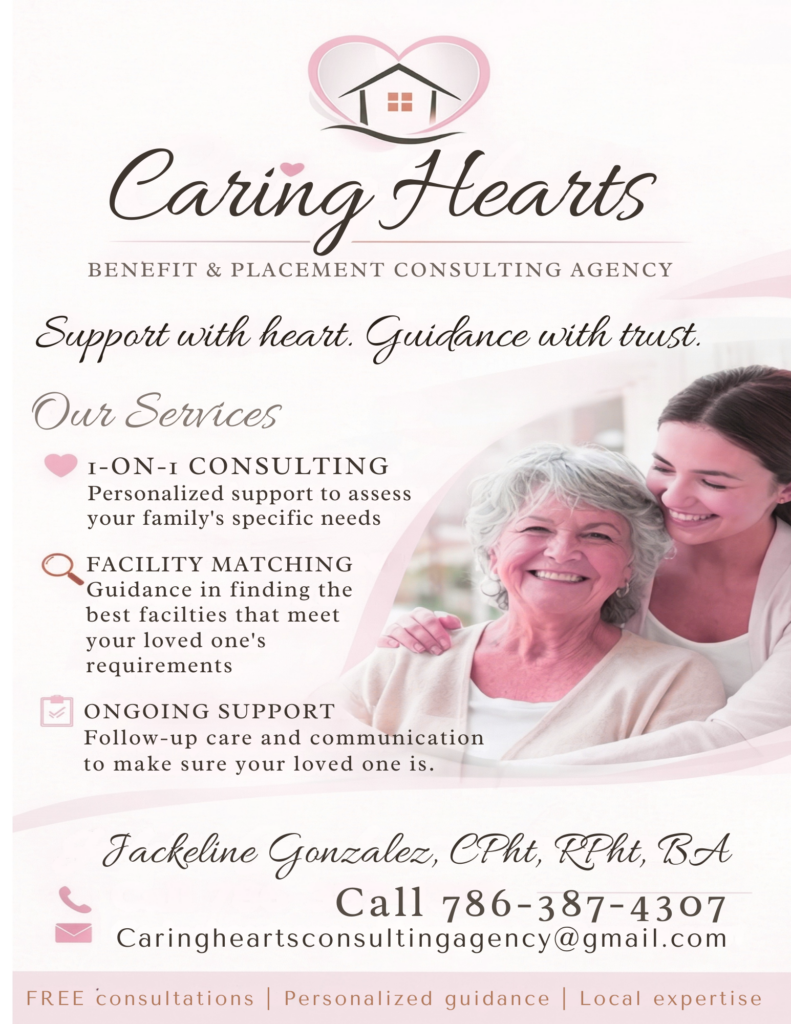
    The first phase was getting Caring Hearts’ visual identity in place: a logo, a flyer, and business cards that could actually represent the business in front of clients and referral partners. Elderly placement is a relationship-driven business — families are making an emotional, high-stakes decision — so the goal was a brand that reads as warm and credible at the same time. The tagline says it plainly: “Support with heart. Guidance with trust.”

    What’s Next: Digital Presence

    With the brand foundation in place, the next phase is about visibility. I’ll be managing Caring Hearts’ social media — creating the ongoing content and assets needed to keep the business in front of the families and referral sources who need it.

    Alongside that, I’m putting together a pitch for how to structure Jakeline’s full digital presence: how social, a future website, and her existing brand assets can work together to actually grow her client base, not just exist online. A website build is next on the roadmap once that strategy is set.

    What Clients Are Already Saying

    Even at this early stage, the results speak for themselves. Real families have shared what the experience of working with Caring Hearts has meant to them:

    “I’m so grateful that we were referred to Jackie. She really made the process of finding an assisted living facility for my mom easier to navigate. She knows all the right questions to ask, has answers for all of them, and genuinely is caring.”

    — Gary N.

    “Caring Hearts was instrumental in their guidance and support with the decision for my father. Jackie went above and beyond to help me during this time… for this support I will be forever grateful!”

    — Migdalia M.

    “Jackeline is the definition of a caring heart! She’s patient, kind and goes above and beyond. Even after finding placement for my dad, she continued to check in periodically.”

    — Paula P.

    The Takeaway

    Not every partnership starts with a big launch — some start with getting the fundamentals right first. Caring Hearts is a good example of building in the right order: brand identity, then visibility, then the digital infrastructure to support growth. I’ll be updating this post as the next phases roll out.


    Interested in something similar for your project or business? Book a free consultation.
  • Bodyslam.shop: Turning Inside Jokes into a Merch Brand

    Bodyslam.shop: Turning Inside Jokes into a Merch Brand

    Role: Founding Designer & Merchandise Partner

    Where It Started

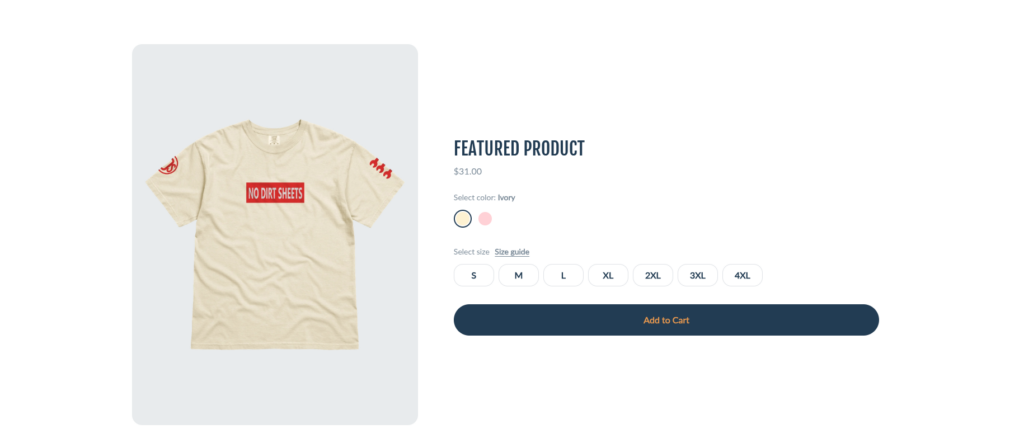
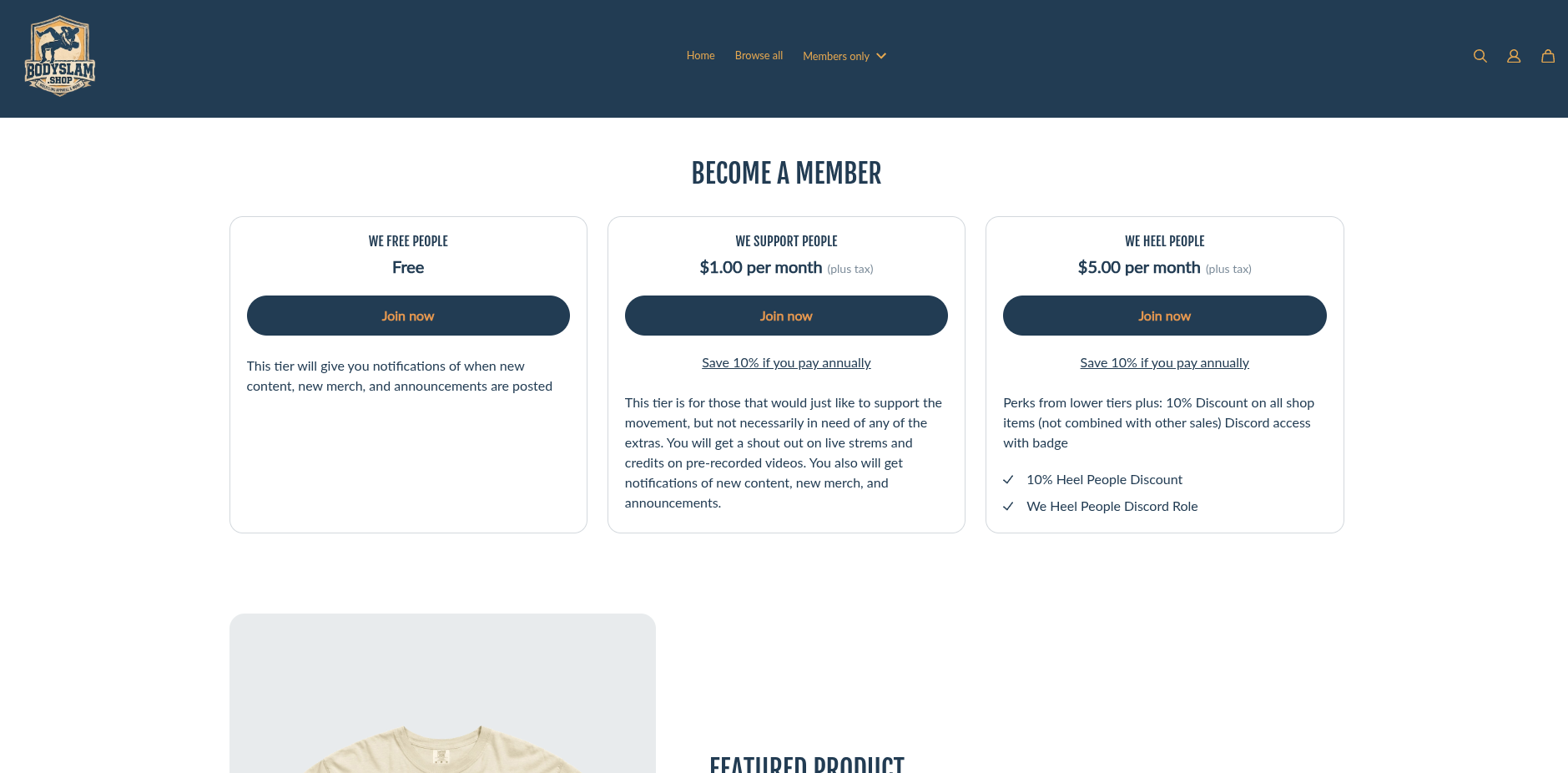
    Bodyslam.shop grew directly out of the work I was already doing with No Dirt Sheets. What began as merch for one creator’s brand turned into something bigger: a standalone shop built to service merch not just for Leo, but eventually for other creators and independent wrestlers too.

    The Designs

    Most of what’s in the shop, I designed myself. A lot of it started as inside jokes — things that came directly out of the livestream chat during watch-alongs, the kind of moments only the community would recognize. From there, I worked the Bodyslam name and logo into a broader lineup: spoof designs that riff on popular wrestling merch and streetwear aesthetics, giving the shop a look that feels familiar to the culture it’s built for, while still being distinctly its own.

    The Rebrand, With a Purpose

    The shift to the Bodyslam name wasn’t just cosmetic — it was strategic. Rebranding gave the shop room to grow beyond a single creator’s merch table into something more like an open platform: a place where other creators, and potentially wrestlers themselves, could have their merch produced and distributed under one roof.

    The Platform Behind It

    For the storefront itself, we went with Fourth Wall. It integrates directly with YouTube, which matters a lot for a creator-first shop — no upfront costs to get started, and a much shorter path from “someone watching a stream” to “someone buying merch.”

    The Takeaway

    Bodyslam.shop is proof that a merch store doesn’t have to start with a warehouse and a budget — it can start with a running joke in a livestream chat and a clear idea of who you’re building for. Keeping design, brand, and platform choices all pointed at the same audience is what turned it into something that could scale past one creator.


    Interested in something similar for your project or business? Book a free consultation.
  • From Watch-Alongs to a Wrestling Media Business: The No Dirt Sheets Story

    From Watch-Alongs to a Wrestling Media Business: The No Dirt Sheets Story

    Role: Media & Business Strategy Partner

    The Starting Point

    Leo (No Dirt Sheets) came to me with something a lot of creators have: momentum, but no map. He was livestreaming wrestling watch-alongs, building a genuine audience, and doing it well — but everything lived in one place, tied to one format. There was no plan connecting the content he was making to a sustainable business behind it.

    He asked me to look at everything — the streams, the ideas, the loose threads — and help him turn it into a coherent plan.

    Getting in the Room

    I didn’t start by opening a laptop. I started by joining him. From late 2025 through the summer of 2026, I sat in on his watch-alongs regularly, first as a fan, then as a collaborator thinking through the business alongside him in real time. That mattered — you can’t build a strategy for a creator’s audience without actually being part of it.

    Cash Money Mondays
    Cash Money Mondays livestream

    Out of those sessions came the real work: figuring out how streaming, merch, and content clipping could reinforce each other instead of existing as separate efforts, and putting that into an actual business plan rather than a list of ideas.

    What Came Out of It

    A business plan that ties the pieces together. Streaming, merch, and content strategy stopped being three separate things Leo was juggling and became one system feeding itself.

    Bodyslam.shop. Rather than merch being a side feature bolted onto Leo’s brand, we spun it out as its own entity — built to handle merch distribution for No Dirt Sheets, but designed from day one to also produce and dropship merch for other creators, and potentially wrestlers themselves. It’s infrastructure, not just a store.

    The Inkwell. A Discord community that grew out of a connection to a concept on Leo’s site — a home base for the audience, not just a chatroom.

    A content IP roadmap. We mapped out concepts for several ongoing shows under the No Dirt Sheets banner: Inkwell Championship Wrestling, The Kingz Court, and The Creator’s Corner — each a distinct format, all part of the same ecosystem.

    Real interviews, published. We sat down with independent wrestlers for on-camera interviews — genuine content, not concept work. You can find some of this collaboration on No Dirt Sheets’ YouTube and cross-posted on my channel.

    Interviewing Shaloncé Royal on Inkwell Championship Wrestling.

    Where Things Stand

    Leo is currently rebuilding his website to bring all of this — the streams, the shows, the shop, the community — under one roof for the first time. The strategy work is done; the execution is actively underway.

    The Takeaway

    This wasn’t a “build me a website” engagement. It was: take someone with real talent and real audience trust, and build the business architecture underneath it so the momentum doesn’t stall out. That’s the kind of work I like taking on — less about a single deliverable, more about being the person who sees the whole board.


    Interested in something similar for your project or business? Book a free consultation.